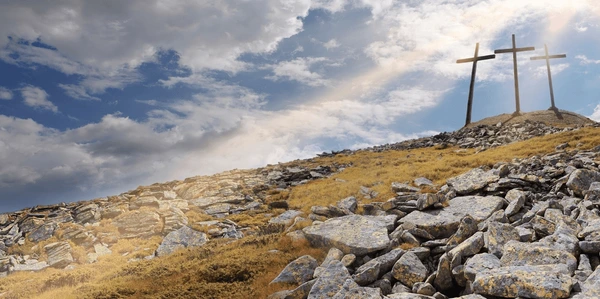
John does not let us look at Easter morning without first looking at the cross. Jesus was crucified at the place called Calvary, or Golgotha, where He gave His life to redeem the sins of mankind. As John records, when Jesus received the wine vinegar, he said, “It is finished.” With that he bowed his head, and gave up his spirit. (John 19:30).
Those words, It is finished, carry great weight. At Calvary, Jesus did not suffer as a helpless victim. He laid down His life in obedience to the Father and in love for us. The work He came to do was completed there.
But the Gospel of John does not end at the cross.
On the first day of the week, Mary Magdalene came to the sepulchre early, while it was still dark, and saw that the stone had been taken away. Peter and John ran to the tomb and found the linen clothes lying there, and the napkin that had been about His head folded in a place by itself. The tomb was not a place of defeat. It had become a witness to the risen Christ.
Later, Jesus spoke Mary’s name, and in that moment her sorrow began to give way to recognition and hope. The One who had died at Calvary was alive again.
This is the heart of the Christian faith: the cross was real, the burial was real, and the resurrection was real. John shows us both the suffering of Christ and the victory of Christ. He leads us from the place of death to the empty tomb, so that we may believe that Jesus is the Christ, the Son of God, and that believing we might have life through His name.
Calvary tells us the price of our redemption. The empty tomb tells us that death did not have the final word.
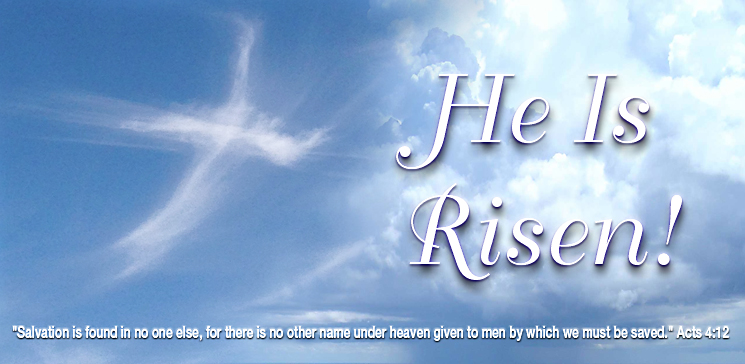
Because of that, Easter is not only a remembrance of something long ago. It is the living hope that Jesus Christ conquered sin and death, and that all who trust in Him have hope beyond the grave.
For compelling evidence that Jesus defeated death, listen to this podcast: